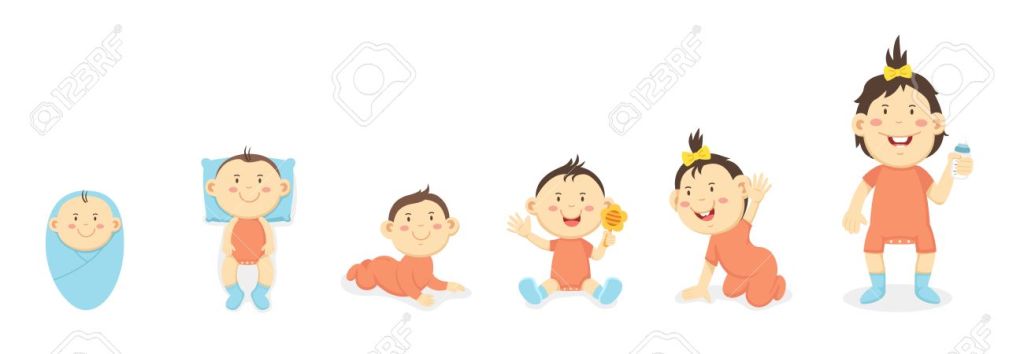
Physical development is the process that starts in human infancy and continues into late adolescent concentrating on gross motor skills and fine motor skills. Physical development involves control over the body, including muscles and physical coordination. Physical development is divided into fine and gross motor skills.
Fine motor skills are the development and control of the smaller muscles of the hands, fingers, and feet so that a child can do more tasks such as drawing, fasten buttons on a shirt. Fine motor skills are more challenging to perform and begin to develop in life than gross motor skills. They tend to develop together because many activities depend on the coordination of both skills. When a baby is firstborn, they are not aware of the fact that they have hands. During their first year of life, an infant learns how to control their movements with their hands. When the child is approximately a year old, they learn how to hold objects using their thumb and index finger. As the child grows into toddlerhood, they normally start to develop whether they will be left or right-handed. The development of fine motor skills plays a crucial role in being ready to start school. Buying child puzzles and building blocks will also encourage the development of fine motor skills.
Gross motor skills involve motor development of muscles that enable babies to hold up their heads, sit and crawl and eventually walk, run, jump and skip. Newborn babies have very little control over their bodies and the actions that they make. As they get older, they develop more control over these activities. A child may learn how to walk at 9 months while another child may learn to walk at 18 months. Gross motor development has two fundamentals: head to toe and trunk to extremities. This means that those gross motor skills develop in the headfirst before the arms and feet. Example: a child learns to hold its head up before walking and sitting up.
A milestone is an action or event that marks a significant change or stage in a child’s development. From birth to 3 months, most infants begin to raise their heads slightly as they lie on their stomachs, hold their hands in a fist, use sucking and grasping reflexes and touch and pull their own hands. From 3 months to 6 months, babies are getting stronger and sharper. They begin to roll over, reach for objects, put objects in the mouth, push their bodies forward and pull themselves up by grabbing the railing of the crib. From 6 months to 9 months, most children begin to crawl, pull things towards themselves, move things from hand to hand and childproofing becomes important. From 9 months to 12 months, most children are sitting and standing without any help, walking with the help of someone and picking up and dropping toys. From 1 to 2 years, most children can walk by themselves, pick up their toys as they are standing, turn knobs, scribble on a paper, move to music being played, go up and down stairs without help and sit in a chair by themselves. From 2 to 3 years, children can kick a ball, jump in place, run, hold a crayon and draw a circle. From 3 to 4 years, children can balance on one foot, walk on a line, ride a tricycle, go down a slide with no help and build a tower with blocks. From 4 to 5 years, most children can do somersaults, jump forward with falling, jump on one foot, use safety scissors to cut on a line and write a few letters.
 Children's Growth and Development